 Kenneth Eade, an attorney and author, has recently achieved a significant victory for third-party sellers on Amazon. Eade's arbitration case against Amazon challenged the company's Business Solutions Agreement (BSA), which outlines the terms and conditions that sellers must agree to in order to use Amazon's platform.
Eade argued that the BSA was unenforceable because it included a mandatory arbitration clause that gave Amazon an unfair advantage, as well as other one-sided and oppressive provisions. The arbitrator agreed, ruling in Eade's favor and striking down the BSA as unenforceable. The arbitration case in question was filed in the AAA arbitration forum, and the ruling was issued on January 26, 2021. The case number is AAA Case No. 1830032881. This landmark victory has significant implications for third-party sellers on Amazon, who have long felt that the company's terms and conditions are unfairly weighted in favor of Amazon. The ruling could pave the way for other sellers to challenge the BSA and other agreements in arbitration, and could force Amazon to revise its terms to be more equitable for sellers. Eade's success in striking down the BSA is particularly noteworthy because it comes at a time when Amazon is facing increased scrutiny from regulators and lawmakers for its treatment of third-party sellers. The company has been accused of using its dominance in the marketplace to disadvantage smaller sellers, and of engaging in anti-competitive practices. The success was followed by three major victories in the first quarter of 2023, striking section 2 of the BSA as an unenforceable liquidated damages clause, as well as a ruling that Amazon's video verification process (IPI) is not a condition to the release of seller funds. The mandatory arbitration clause in the BSA has been a particular point of contention for many sellers, who argue that it gives Amazon an unfair advantage in resolving disputes. By striking down this clause, Eade has helped level the playing field for sellers and provided them with more options for resolving disputes with Amazon. Moreover, Eade's victory sends a message to other companies that use mandatory arbitration clauses in their agreements. It suggests that these clauses may not be as ironclad as companies may have hoped, and that they could face legal challenges from parties who feel that they are unfair or oppressive. In conclusion, Kenneth Eade's success in striking down Amazon's Business Solutions Agreement in arbitration is a landmark victory for third-party sellers on the platform. It raises important questions about the fairness and equity of Amazon's treatment of its sellers, and the potential implications for other companies that use mandatory arbitration clauses in their agreements. The ruling in this case, as well as others that have found Amazon's BSA to be unenforceable, highlights the importance of carefully reviewing and understanding the terms and conditions of any agreement before agreeing to them. If you have a dispute with Amazon and wish to arbitrate, call, chat or email the winning legal team of Amazon Sellers Attorney.  As an Amazon seller, you’re likely familiar with the various challenges that come with running a business on the platform. But in recent months, one issue has risen to the top of the list: supply chain disruptions.
The COVID-19 pandemic has had a profound impact on global supply chains, leading to shortages of raw materials, manufacturing delays, and shipping bottlenecks. These disruptions have affected businesses across all industries, and Amazon sellers are no exception. Here are some of the ways that supply chain disruptions are affecting Amazon sellers: Inventory shortages: With factories shut down and shipping delays, it can be difficult for sellers to maintain adequate inventory levels. This can lead to stockouts, lost sales, and a decline in seller performance metrics. Shipping delays: Even if sellers are able to procure inventory, they may face delays in shipping it to Amazon’s warehouses. This can lead to longer lead times for customers and a decline in seller performance metrics. Price increases: With supply shortages, the cost of raw materials and manufacturing has gone up. This can lead to price increases for sellers, which can be difficult to pass on to customers. Increased competition: With some sellers unable to maintain adequate inventory levels, others may try to fill the gap. This can lead to increased competition and a race to the bottom on prices. So, what can Amazon sellers do to mitigate the impact of supply chain disruptions? Here are some tips: Diversify your suppliers: If you rely on a single supplier for your inventory, consider diversifying to reduce the impact of any disruptions. Monitor your inventory levels closely: Keep a close eye on your inventory levels and adjust your purchasing and pricing strategies accordingly. Communicate with customers: If you are experiencing shipping delays or stockouts, be transparent with your customers and communicate any delays or issues as soon as possible. Be prepared to pivot: If a particular product is no longer viable due to supply chain disruptions, be prepared to pivot your business to other products or categories. In summary, supply chain disruptions are the latest challenge for Amazon sellers, but with careful planning and preparation, it’s possible to mitigate their impact on your business. Stay vigilant, stay flexible, and keep an eye on the ever-changing landscape of the Amazon marketplace. You are not alone! If you have any questions about Amazon seller policies or have any issues with your seller account, you can always call, email or chat with us, 24 hours a day, free! We are always here to help you!  Certified refurbished items are pre-owned products that have been tested and restored to like-new condition. These products can offer customers significant savings over new products, while still providing a high level of quality and reliability. If you're interested in selling certified refurbished items on Amazon, here's what you need to know.
 Drop shipping is a popular business model where sellers list products for sale on Amazon but don't actually hold inventory themselves. Instead, they purchase the product from a third-party supplier and have it shipped directly to the customer. While drop shipping can be a legitimate and profitable business, it has also become a breeding ground for scams and fraud, particularly against Amazon sellers. In this article, we'll explore some common Amazon drop shipping scams that target sellers and how to avoid them.
In conclusion, drop shipping can be a profitable business, but it's important to be aware of the potential scams and frauds that can occur, particularly against Amazon sellers. To avoid these scams, regularly monitor your listings and product reviews, communicate clearly with your drop shippers, and implement strict policies to protect your brand and revenue. By taking these precautions, you can ensure a safe and successful drop shipping experience on Amazon. If you have any questions about drop shipping on Amazon, or have had your account suspended or have received a policy violation warning, please call, chat or email us for a free consultation.
 As an Amazon seller, having your account deactivated can be a frustrating and stressful experience. Deactivation can happen for various reasons, such as violating Amazon's policies, selling prohibited products, or receiving multiple negative feedbacks from customers. If your Amazon seller account has been deactivated, you have the option to appeal the decision. In this blog post, we will discuss the appeals of Amazon seller account deactivations. Understand the reason for deactivation Before you can appeal, it is essential to understand the reason for your account deactivation. Amazon will send you an email that outlines the reason for the deactivation but it may not provide much detail. Take the time to review the email carefully and understand the root cause of the issue. Plan your appeal Once you understand the reason for your deactivation, plan your appeal carefully. Amazon has a specific appeals process that you will need to follow. Your appeal should be concise, detailed, and provide evidence to support your case. Be sure to address the specific reason for the deactivation and explain why you believe your account should be reinstated. Provide documentation Providing documentation to support your appeal is essential. This documentation can include invoices, receipts, and other proof of purchase. If you were deactivated for selling prohibited items, provide documentation that shows you were not aware of the prohibited items' status. If you received negative feedback from customers, provide evidence that you have taken steps to address the issue, such as offering refunds or replacements. Show remorse and take responsibility Showing remorse and taking responsibility for any mistakes can go a long way in appealing your account deactivation. Acknowledge any mistakes you made and explain what you have done to correct them. If you have taken steps to improve your seller account, such as improving your customer service, be sure to mention these in your appeal. Be patient Amazon receives a large number of appeals every day, so it is important to be patient. It may take some time for Amazon to review your appeal and make a decision. Be sure to follow up with Amazon regularly to check on the status of your appeal. In conclusion, appealing an Amazon seller account deactivation can be a challenging process, but it is possible. Understanding the reason for the deactivation, planning your appeal, providing documentation, showing remorse and taking responsibility, and being patient can all increase your chances of success. Remember, Amazon's goal is to provide a safe and trustworthy platform for buyers and sellers, so be sure to follow their policies and guidelines carefully to avoid future deactivations. Writing an appeal of a deactivated seller account requires thoughtful planning and you must follow Amazon's strict standards. Here at Amazon Sellers Attorney we are experts at writing winning plans of action. Please call or chat with us now for a free consultation and get back to selling on Amazon.  Beverly Hills, California – WEBWIRE – Tuesday, March 21, 2023
Amazon Sellers Attorney, a lawyer-supervised suspension appeal service, announced today that three arbitrators sitting in three different states in arbitrations against Amazon.com (AMZN) have stricken section 2 of Amazon’s Business Solutions Agreement, which allows Amazon to hold funds indefinitely if they suspect the third-party seller sold inauthentic products, holding that it is not enforceable and ordered Amazon to release the third-party seller’s funds. In an arbitration against Amazon.com, LLC brought by a Chinese seller, an ex-judge sitting as an arbitrator in Florida ruled that section 2 of the BSA imposed a penalty and was an unenforceable liquidated damages clause. The judge also ruled that failure to submit to an in-person video verification interview by Amazon was not a condition to release of the seller’s sales proceeds being held by Amazon, and that the seller was entitled to its sales proceeds notwithstanding the fact that it breached the BSA by committing review manipulation, which is against Amazon’s policies. The judge awarded the seller nearly half a million dollars in damages. “This case is a landmark achievement, as it clearly distinguishes other cases in which arbitrators ruled erroneously in favor of Amazon,” said Kenneth Eade, co-counsel. “I commend my co-counsel Julie Guo for an excellent job on this case.” On March 15, 2023, in another case, an arbitrator sitting in Tennessee ruled that section 2 of the BSA was an unenforceable penalty clause in another reivew manipulation case. The arbitrator also struck the clause as unconscionable, and held that the seller was entitled to its proceeds notwithstanding its breach of the BSA. The award was for over $340,000, with interest from the date of account deactivation. In the largest of the three cases, an arbitrator in Texas ordered Amazon to disburse almost $800,000 in seller proceeds, ruling that Amazon breached its duties under the BSA to distribute the seller’s proceeds, that the verification of the seller’s identity in an in-person video verification procedure was not a condition to the release of those funds, and that section 2 of the BSA was not a valid liquidated damages clause. About Amazon Sellers Attorney Amazon Sellers Attorney is an Amazon appeal service, supervised by lawyers, which serves third-party sellers worldwide with issues of suspension of their Amazon seller accounts and deactivation of listings through its website at www.amazonsellers.attorney. The firm provides 24-hour service to its customers by live chat, telephone, and email, and free appeal consultations. Its current supervising attorney, Kenneth Eade, represented the above-referenced sellers at co-counsel with Julie Guo, of JS Law, New York, after each Chinese-based seller had lost their appeals for the reinstatement of its Amazon seller account and restoration of sales proceeds. 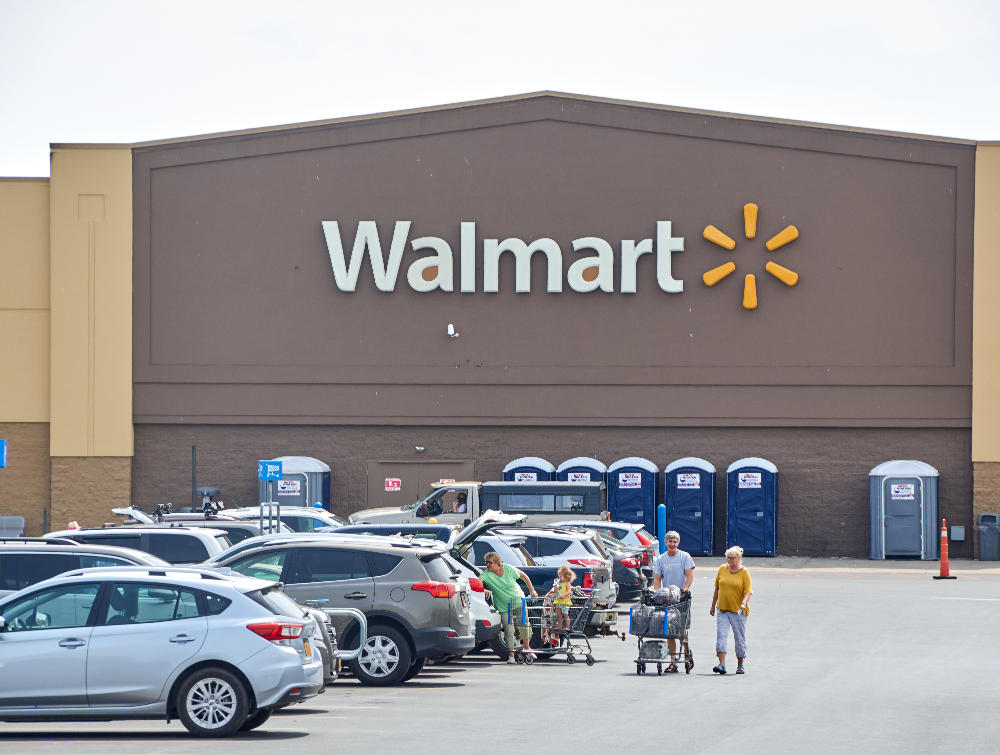 What is Retail Arbitrage?A common subject in the forums is retail arbitrage, the practice of buying items at retail sales or close-out events, in such retail stores as Walmart or Best Buy, and then listing those products for sale on Amazon. Recently, probably because of Amazon’s increase in requiring brand-gating or approval to list in certain categories, its Seller Performance Team has been refusing to accept retail receipts as proof of authenticity. This can result in a suspension of a listing or bring an entire seller account to a halt, a devastating occurrence that requires a second look into this common practice. There is no official Amazon policy on the subject, which may be why the “get rich quick” seminars still tout it. This is the reason why many clients, when I advise them retail arbitrage is a thing of the past, they often argue with me. The writing on the wall shows that I am correct. Retail arbitrage on Amazon is a thing of the past. Once you get caught in the web of review, you are going to have to produce invoices with such detail on them that almost no retail receipt will pass muster. Amazon will not tell you this. If you ask anyone, they will tell you sourcing from retail sources is allowed on Amazon. What they won't tell you is that if a customer complains, you are likely to lose your listing or account to suspension. Amazon is gating more and more brands every day, and now has subjected sellers who are already selling in certain categories, to apply for approval to list products in those categories, and one of the things they ask for are “invoices or receipts.” Make no mistake, however, the word “receipts” does not mean that they will accept a cashier-printed receipt from WalMart or Target. Online Retail ArbitrageThis may be the easiest way to start a retail store on Amazon, as well as the easiest way to get your account suspended. Many of the Amazon gurus will advise drop shipping from online stores, such as Walmart, Target, Best Buy, Lowes, or Bed, Bath and Beyond. Drop shipping from online retailers is strictly prohibited on Amazon and will surely get your account deactivated. It is also one of the most difficult types of suspensions to resolve, and takes the longest amount of time. If you want to use online retail arbitrage, you must first ship the items to your own warehouse, repack them and remove all evidence of the retail store, and send them on to your customers. Amazon Retail ArbitrageAmazon Retail Arbitrage means buying products from a physical retail store for less and reselling these products on online marketplaces such as Amazon for a higher profit. In the retail arbitrage model, sellers must also invest time and energy in product sourcing and logistics. Because these products are purchased for much less or on liquidation, significant profit margins are possible. Issues in Retail Arbitrage on AmazonRetail arbitrage can be a heavy investment of time, as sourcing in retail stores requires consistent dedication. Product quality problems like damaged packaging, packaging that doesn’t match the listing description, store returns with possible missing parts unknown to the seller can often arise and can cause complaints. Intellectual property complaints arise when an Amazon seller sells a particular product from a well-known brand. The brand may file an intellectual property complaint and Amazon will ask the seller to provide invoices and proof of authorization to sell their products. Most RA sellers do not have access to this documentation. Key TakeawaysChances are that any recognized brand, such as Samsung, Apple, Nike or Adidas, is off-limits and selling it is an unreasonable risk unless you are buying from an authorized wholesale distributor with full resale rights. More and more brands are being added every day.
My advice to Amazon sellers about retail arbitrage? Don’t do it. Convert your supply chain to a wholesale supplier. Otherwise, the next time your account is placed in review, you may have to call someone like me. If you are facing these questions, do not hesitate to call, email or chat with us for a free consultation. 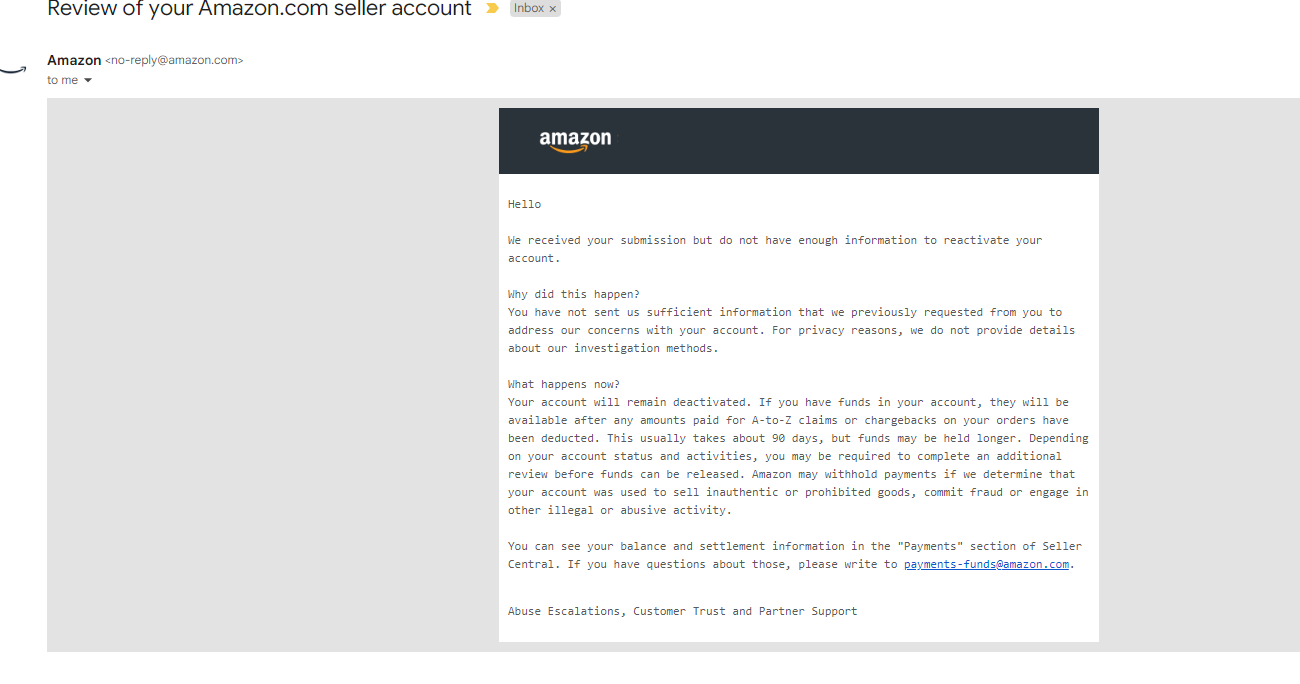 Amazon will send you a performance notification explaining your account has been suspended and your right to appeal the suspension. Account reinstatement can take as little as 48 hours for simple issues but more complex issues can sometimes take weeks or even months. The first step is to file a Plan of Action (POA) with Amazon. In it, you must identify the issues that are the root causes of your account suspension, tell Amazon how you have corrected them, and assure them you have put programs into place to avoid making the same mistakes in the future. You will, most likely, need to file multiple updates to the plan of action, so it is very important to contact professionals like us who know what Amazon expects to see in a POA with regard to your particular case. Get Your Amazon Seller Account ReinstatedAmazon Sellers Attorney is here to help you, if your account has been suspended or deactivated due to breaches of Amazon's policies and Section 3 of the Business Solutions Agreement. Each Amazon Appeal and Plan of Action are unique, and must be approached with regard to the specific facts in each seller's case. However, there are some common types of suspensions we see everyday. Common Reasons for Suspension of Amazon Seller Accounts
Get Your Seller Account Reinstated TodayCall, chat with us on our main page, or email us today for a free consultation with our Amazon Appeal Experts. We will get your seller account on the fast track to reinstatement.
 What is MAP?MAP or Minimum Advertised Pricing is when a manufacturer tells its distributors and retailers that they cannot advertise the products in their inventory for less than what the manufacturer says. On Amazon.com, this means that you cannot list the price you want to offer customers, also known as “vertical agreements”. What is the Effect of MAP on Amazon?Amazon does not enforce MAP. However, brand owners will try to get around this by making intellectual property complaints, which can lead to Amazon account enforcement and possible Amazon seller account suspension. In many cases, we can negotiate with the brand owners making the complaint and keep your account safe. In other cases, as with large brands, we may counsel you that it is just too risky to oppose them.
Please call us , chat with us on our main page or email us for a free consultation if you have any questions about MAP enforcement. |
Archives
April 2024
|

- Reviews
- Amazon News
-
Our Services
-
Amazon Appeals| Reinstate Account
>
- Amazon Appeal Inauthentic Item Suspension
- Amazon Appeal ODR Suspensions
- Amazon Related Account Appeals
- Appeal Amazon Verification Suspension
- Amazon Restricted Product Appeals
- KDP and ACX Termination Appeals
- Merch by Amazon Termination Appeals
- Amazon Drop Shipping Policy Appeals
- FBA Reimbursement Abuse Suspensions| Appeals
- Amazon Relay Suspension Appeals
- Amazon Safety Complaint Appeals
- Sales Velocity Suspension Appeals
- Amazon Sales Rank Manipulation Appeals
- Amazon Price Gouging/Fair Pricing Suspensions Appeals
- Amazon Review Manipulation Suspension Appeals
- Amazon Variation Abuse Appeals
- Amazon Forged or Manipulated Documentation Suspension Appeals
- Amazon Listing (ASIN) Removal? Reinstate Listing
- Amazon Seller Fraud or Illegal Activity Deactivation Appeals
- Amazon Account Hacked Suspension Appeal
- Amazon Funds Appeal
- How to Open Multiple Amazon Seller Accounts
- Twitter Account Suspension Appeals
- How to Settle Amazon TRO and Release Funds
- Amazon Arbitration Lawyers Sue Amazon and Win
- Amazon Brand Registry Support
- Amazon Intellectual Property Lawyers >
- LLC Formation for Amazon Sellers
- Ebay Suspension Appeals
- Walmart Suspension Appeal
- Appeal Closed or Limited PayPal Account
- Etsy Suspension Appeal
- Amazon Hijacker Removal Service
-
Amazon Appeals| Reinstate Account
>
- Free Consultation
- About us
- Amazon Suspension Prevention with Free Appeals
- Terms and Conditions

 RSS Feed
CONTACT DETAILS:Amazon Sellers Attorney, Ltd.
9350 Wilshire Blvd. suite 203 Beverly Hills, CA 90212 نتحدث العربية
Türkçe konuşuyoruz Nous parlons français 🇫🇷 Мы говорим по русски 🇷🇺 Se habla español 🇪🇸 我們說中文 🇨🇳 |
SERVICES:Amazon Appeals
Inauthentic Item Suspensions Multiple/ Related Account Suspensions Amazon Verification Suspensions Forged or Manipulated Documentation Defending Buyer Complaints Plan to Prevent Suspension Intellectual Property (IP) Law Reinstating ASIN Fraud or Illegal Activity Hacked Account Listing Hijackers DMCA Lawyers Amazon Arbitration |
PAYMENTS:We accept payments from all major credit cards and also by ACH transfer through BlueSnap. Our purchase currency is US Dollar (USD). Payments made through our site are secure.

|

AS REPORTED IN:

|

|

|

|

|
Copyright © 2024 AMZ Sellers Attorney ® All Rights Reserved. Privacy Policy